
Company Profile
| company name | Eisho Shoji Co., Ltd. |
|---|---|
| capital | 10,000,000 yen |
| establishment | April 2, 2014 |
| location | 〒306-0657, 301-2 Karijuku, Bando-shi, Ibaraki, Japan |
| contact address | TEL: +81-297-44-5752 FAX: +81-297-44-5753 |
| business details | Recycled raw material manufacturing |
Clean, Consistent Regrinds
We turn light PIR/PCR plastics into clean, dense flakes for smooth processing.
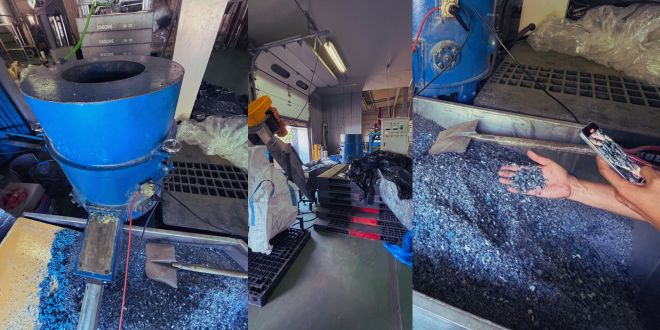
We use a cutter-compactor to turn light plastic waste (PIR/PCR) into clean, dense flakes. The machine spins fast, warms the plastic by friction, and cuts it into small pieces. We then screen the material and remove any metal. Each batch is checked by hand so the pieces stay about 8–12 mm and moisture stays low. These uniform regrinds flow well in compounding, extrusion, and injection—giving you steady quality and lower cost.
During processing, the cutter-compactor carefully controls temperature to avoid resin degradation while still achieving high bulk density. This makes the material easier to transport, feed, and meter into downstream machinery. After size reduction and metal separation, the material is further inspected for color purity, contamination, and odor to ensure consistency with virgin-grade expectations. The final flakes exhibit stable melt flow, low volatility, and excellent blending performance, making them ideal for manufacturers seeking cost-effective yet reliable alternatives to virgin polymers.
Traceable Feedstock Collection.
We source clean PIR/PCR scrap, sort it carefully, and prepare for safe regrinding.
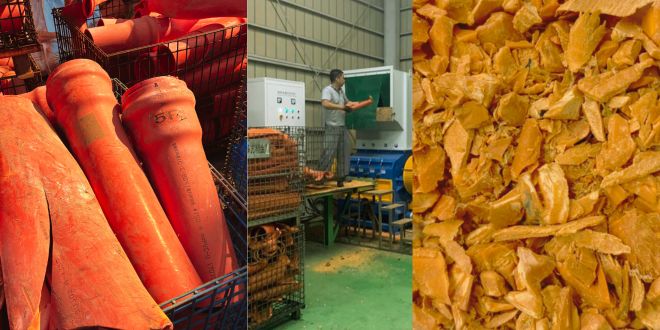
We collect clean plastic scrap from trusted partners. Each pickup is weighed, photographed and checked for polymer type, color, and contamination. Material is sorted and labels removed before packing in jumbo bags for safe handling. This careful sourcing builds traceability and steady supply, giving us reliable input for regrinding and compounding while reducing landfill and transport cost. Consistent quality.
In addition to physical inspection, we also record supplier information, lot numbers, and material history to ensure every batch can be traced back to its source. Only single-grade and non-mixed scrap is accepted, which minimizes risk during processing and guarantees compatibility for the final application.
The scrap is stored in a covered, controlled environment to prevent moisture absorption and foreign particle contamination before processing. This upstream quality control significantly improves downstream efficiency, allowing us to deliver highly stable, batch-to-batch consistent recycled materials that meet the requirements of compounders, film manufacturers, and injection molders globally.